
Social media marketing has changed dramatically over the past few years. Simply posting a product photo, adding a few hashtags, and waiting for customers is no longer enough.
In 2026, successful social media marketing is about creating useful content, building communities, starting conversations, and turning attention into measurable business results.
For small businesses, this offers a valuable opportunity to grow and connect with customers.
You don’t need a huge marketing team or an enormous advertising budget. With the right platform, consistent content, and a clear strategy, social media can help you build brand awareness, generate leads, and increase sales.
So, which social media marketing strategies are delivering results in 2026?
Let’s explore them.
- Focus on the Right Platforms
One common mistake businesses make is trying to maintain a presence on every social media platform.
You don’t necessarily need Facebook, Instagram, TikTok, YouTube, LinkedIn, Pinterest, and every new platform at the same time.
Instead, identify where your target customers spend their time and focus your resources there.
For example:
Instagram: Visual brands, fashion, food, beauty, lifestyle and local businesses
YouTube: Educational content, tutorials, reviews and long-form video
TikTok: Short-form entertainment, discovery and creator-led content
LinkedIn: B2B companies, professionals and service businesses
Facebook: Local communities, groups, older audiences and advertising
WhatsApp: Customer conversations, enquiries and relationship building
For many small businesses, focusing on one or two platforms is more effective than spreading resources across six or seven.
The key is simple:
Be where your customers are—not everywhere.
- Make Short-Form Video a Key Part of Your Strategy
Short-form videos remain one of the most effective content formats for engaging audiences on social media in 2026.
Instagram Reels, YouTube Shorts, TikTok videos and short videos on other platforms give businesses opportunities to reach people beyond their existing followers.
But you don’t need expensive cameras or professional production.
Simple videos can work extremely well.
For example:
Behind-the-scenes videos
Product demonstrations
Quick tutorials
Before-and-after videos
Customer testimonials
Frequently asked questions
“How it’s made” videos
Industry tips
Day-in-the-life content
Common mistakes
Quick product comparisons
In 2026, authenticity is often more valuable than excessive production.
A useful 30-second video that solves a customer’s problem can be more valuable than a perfectly produced advertisement.
- Create Content That Educates, Entertains or Solves Problems
One of the most important social media marketing principles is to stop thinking about every post as an advertisement.
People don’t open Instagram, TikTok or YouTube simply because they want to see advertisements.
They want information, entertainment, inspiration and connection.
A strong content strategy should therefore include different content categories.
Educational content
Teach your audience something useful.
Examples:
5 Common Mistakes to Avoid When Choosing a Laptop
“How to choose the right skincare product”
“3 ways to improve your website”
“How to save money on your monthly electricity bill”
Entertaining content
Create content that people genuinely enjoy watching or sharing.
Inspirational content
Show transformations, success stories, customer results or behind-the-scenes journeys.
Promotional content
Explain your products, services, offers and benefits.
A useful rule is:
Give value before asking for a sale.
- Use AI to Work Faster—Not to Become Generic
Artificial intelligence has become a powerful assistant for social media marketers.
AI can help you:
Generate content ideas
Create captions
Develop video scripts
Research topics
Repurpose content
Analyze performance
Build content calendars
Brainstorm hooks
Summarize customer feedback
However, businesses should avoid publishing large amounts of generic AI-generated content without human editing.
Your audience wants to hear your brand’s perspective—not content that sounds exactly like every other business.
Use AI for efficiency while keeping human creativity, experience and personality at the center.
- Build a Real Community
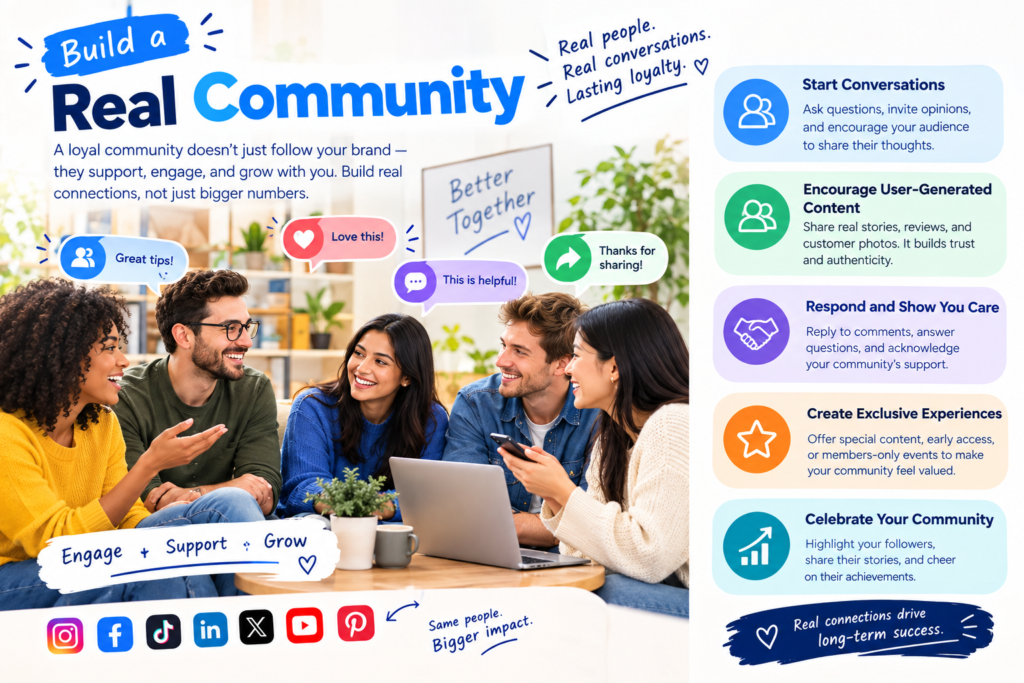
Social media is becoming less about broadcasting messages and more about creating communities.
Instead of asking:
“How many people saw my post?”
start asking:
“How many people started a conversation with my business?”
Respond to comments.
Answer questions.
Reply to DMs.
Ask your audience questions.
Create polls.
Share customer stories.
Recognize loyal customers.
Community management can turn passive followers into people who actively recommend your business.
For small businesses, this personal interaction can be a major competitive advantage.
- Use DMs to Turn Interest Into Customers
A social media follower isn’t automatically a customer.
There needs to be a bridge between attention and conversion.
Direct messages can provide that bridge.
For example, a business could end a post with:
Want the latest prices? Send us a DM to get the complete price list.
Or:
“Message us ‘GUIDE’ and we’ll send you the free checklist.”
This creates a clear and easy path from content to meaningful conversations.
For businesses operating in India, WhatsApp can also be an important part of this process. Social media can generate interest, while messaging can help answer questions, share details and move customers toward a purchase.
- Encourage User-Generated Content
Customers can become some of your most powerful marketers.
User-generated content (UGC) includes:
Customer reviews
Customer photos
Product videos
Testimonials
Unboxing videos
Before-and-after results
Customer stories
Instead of always telling people how good your business is, let your customers demonstrate it.
For example, a clothing brand can encourage customers to share photos of themselves wearing its products.
A restaurant could repost customer food photos.
A fitness business could share customer success stories.
This builds social proof and helps the brand appear more genuine and trustworthy.
- Work With Micro and Nano Influencers
Influencer marketing is also changing.
Businesses don’t necessarily need to work with celebrities who have millions of followers.
Smaller creators can provide access to highly relevant communities.
Micro- and nano-influencers often have strong relationships with their audiences and can create content that feels more natural than traditional advertising.
When choosing an influencer, don’t focus only on follower count.
Look at:
Audience relevance
Engagement quality
Content style
Trust
Brand alignment
Previous collaborations
Actual conversions
A creator with 10,000 highly relevant followers may be more valuable to your business than someone with 500,000 unrelated followers.
Recent industry reporting also shows a growing emphasis on authenticityandsmaller creators rather than relyingsolely on massive follower counts.
- Create Content Series Instead of Random Posts
A random
- Don’t Ignore Social Search
People increasingly use social platforms to discover information, products, businesses and recommendations.
This means your social media content should be discoverable.
Instead of writing vague captions, use clear language that describes what your content is about.
For example, instead of:
“You won’t believe this!”
try:
“5 Instagram marketing tips for small businesses in 2026.”
Use relevant keywords in:
- Captions
- Video titles
- On-screen text
- Profiles
- Descriptions
- Spoken content where appropriate
Think about what your customers would actually search for.
11. Use Paid Advertising Strategically
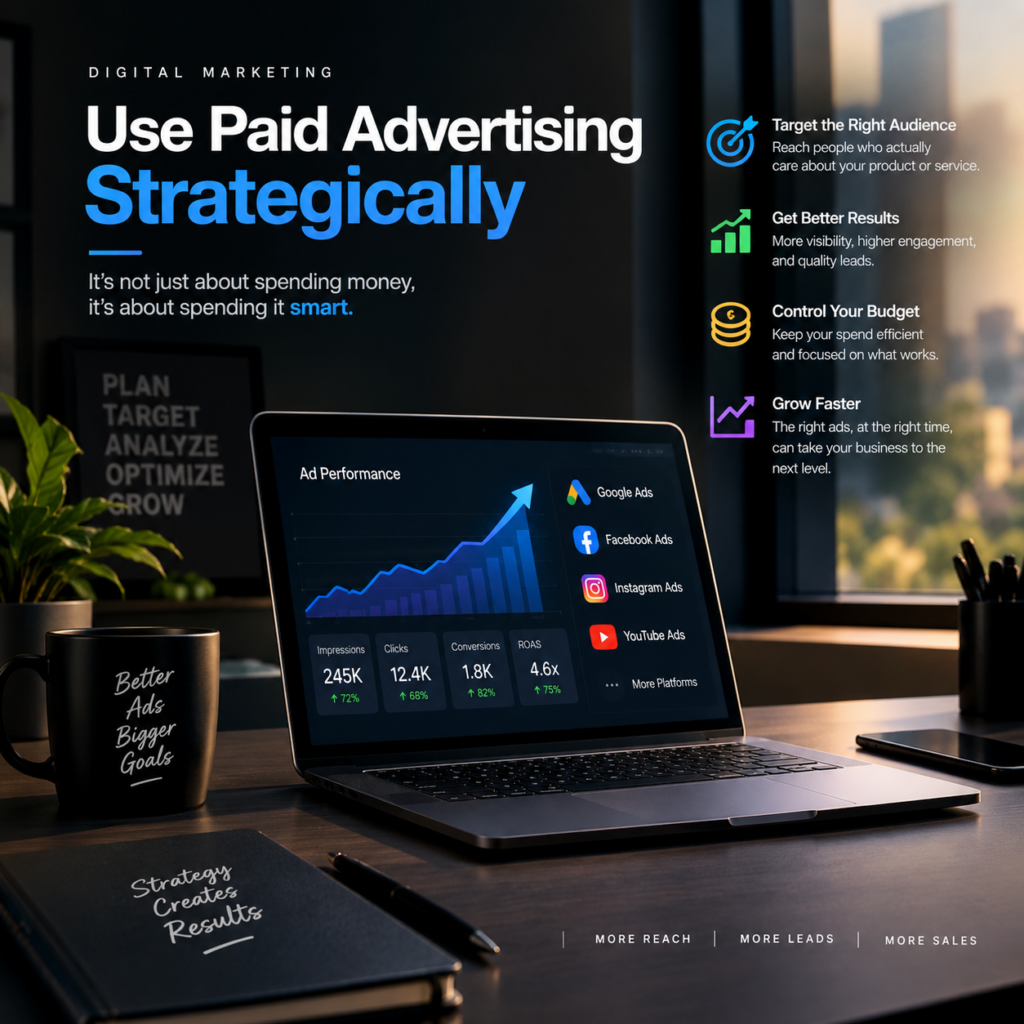
Organic social media is valuable, but paid advertising can help businesses reach targeted audiences more quickly.
You don’t need to spend a huge amount of money.
Start small.
Test different:
- Audiences
- Creatives
- Offers
- Headlines
- Calls to action
- Landing pages
Then invest more in what produces results.
One effective approach is to identify organic posts that already perform well and use paid promotion to reach a larger relevant audience.
Don’t boost posts simply because they received likes.
Instead, look for content that generates meaningful actions such as website visits, enquiries, leads or purchases.
12. Measure Business Results—Not Just Followers
Follower count can look impressive, but it doesn’t necessarily indicate business growth.
A better social media strategy measures outcomes.
Important metrics include:
- Reach
- Engagement rate
- Profile visits
- Website clicks
- DMs
- Leads
- Sales
- Conversion rate
- Cost per lead
- Return on advertising spend
- Customer retention
For example, getting 10,000 views is nice.
But if another video gets 2,000 views and generates 20 qualified enquiries, the second video may be much more valuable.
Vanity metrics show attention. Business metrics show impact.
13. Repurpose Your Best Content
Creating new content every day can be exhausting.
Instead, make one strong piece of content and repurpose it.
For example, a 10-minute YouTube video could become:
- 3 Instagram Reels
- 5 short social posts
- 1 LinkedIn post
- 1 blog article
- 5 quote graphics
- 1 email newsletter
- Several FAQ answers
This allows you to get more value from the same idea without constantly starting from zero.
14. Focus on Authenticity
Consumers are becoming increasingly aware of overly polished marketing.
Your audience wants to know:
- Who is behind the business?
- How is the product made?
- What does the team look like?
- What do real customers think?
- What makes your business different?
Show the human side of your company.
Share mistakes.
Show your process.
Introduce your team.
Tell your story.
Authenticity doesn’t mean being unprofessional.
It means being real and recognizable.
15. Build a Simple Social Media Funnel
Your social media strategy should have a clear path from discovery to purchase.
A simple funnel might look like this:
Step 1: Discover
A person sees your Reel, Short or post.
↓
Step 2: Engage
They visit your profile or watch more content.
↓
Step 3: Trust
They see educational content, reviews and customer stories.
↓
Step 4: Contact
They send a DM, visit your website or contact you on WhatsApp.
↓
Step 5: Convert
They purchase your product or service.
↓
Step 6: Retain
You continue communicating with them and encourage repeat purchases or referrals.
This is much more effective than simply posting content and hoping someone buys.
A Simple 2026 Social Media Strategy
If you’re a small business owner and don’t know where to begin, try this simple framework.
Choose 1–2 platforms
Don’t try to manage everything at once.
Create 3–5 pieces of content per week
Focus on useful and engaging content rather than posting just for the sake of posting.
Use short-form video
Create simple videos that answer customer questions and demonstrate your expertise.
Engage every day
Spend time replying to comments and messages.
Create one clear offer
Give your audience an obvious next step, such as contacting you, booking a consultation or visiting your website.
Track results
Review your analytics every week and identify what generated the most meaningful business activity.
Improve
Create more of what works and reduce what doesn’t.
Common Social Media Marketing Mistakes to Avoid in 2026
Even with the best tools, businesses can waste time by making a few common mistakes.
Chasing followers
A large audience isn’t useful if none of them are potential customers.
Posting without a strategy
Random content rarely produces consistent results.
Being on every platform
More platforms mean more work. Focus on the channels that matter.
Using too much promotional content
People don’t want every post to be an advertisement.
Ignoring comments and DMs
Social media is a conversation, not a billboard.
Copying competitors
Your brand needs its own voice and perspective.
Relying completely on AI
AI can speed up your workflow, but generic content can make your brand forgettable.
Measuring likes instead of sales
Engagement matters, but business outcomes matter more.
Final Thoughts
Social media marketing in 2026 is not about finding one secret algorithm trick.
It’s about building a system that consistently attracts the right audience, provides useful content, creates conversations and turns attention into business results.
The most effective strategies combine short-form video, authentic content, community building, AI-assisted workflows, creator partnerships, social search, DMs and data-driven decision-making.
Most importantly, don’t try to do everything.
Choose the platforms where your customers are, understand what they need, create content that genuinely helps them, and measure what contributes to your business.
The goal isn’t to become the most-followed brand on social media. The goal is to become the brand your ideal customers remember, trust and choose.
- Don’t Ignore Social Search
People increasingly turn to social media to find information, products, businesses, and recommendations. That’s why your content should be easy for potential customers to discover.
Instead of writing vague captions, use clear language that describes what your content is about.
For example, instead of:
“You won’t believe this!”
try:
5 Instagram Marketing Tips Small Businesses Can Use in 2026
Use relevant keywords in:
Captions
Video titles
On-screen text
Profiles
Descriptions
Spoken content where appropriate
Think about what your customers would actually search for.
- Use Paid Advertising Strategically
Organic social media can build long-term engagement, while paid advertising helps businesses reach specific audiences more quickly.
You don’t need to spend a huge amount of money.
Start small.
Test different:
Audiences
Creatives
Offers
Headlines
Calls to action
Landing pages
Then invest more in what produces results.
A practical approach is to identify high-performing organic posts and promote them to reach a wider, relevant audience.
Don’t boost posts simply because they received likes.
Instead, look for content that generates meaningful actions such as website visits, enquiries, leads or purchases.
- Measure Business Results—Not Just Followers
Follower count can look impressive, but it doesn’t necessarily indicate business growth.
A better social media strategy measures outcomes.
Important metrics include:
Reach
Engagement rate
Profile visits
Website clicks
DMs
Leads
Sales
Conversion rate
Cost per lead
Return on advertising spend
Customer retention
For example, getting 10,000 views is nice.
But if another video gets 2,000 views and generates 20 qualified enquiries, the second video may be much more valuable.
Vanity metrics show attention. Business metrics show impact.
- Repurpose Your Best Content
Creating new content every day can be exhausting.
Instead of creating new content for every platform, focus on producing one valuable piece and repurpose it in different formats. For example, a 10-minute YouTube video could be turned into:
3 Instagram Reels
5 short social posts
1 LinkedIn post
1 blog article
5 quote graphics
1 email newsletter
Several FAQ answers
This helps you maximize the value of one idea without having to create everything from scratch each time.
- Focus on Authenticity
Consumers are becoming increasingly aware of overly polished marketing.
Your audience wants to know:
Who is behind the business?
How is the product made?
What does the team look like?
What do real customers think?
What makes your business different?
Show the human side of your company.
Share mistakes.
Show your process.
Introduce your team.
Tell your story.
Authenticity doesn’t mean being unprofessional.
It means being real and recognizable.
- Build a Simple Social Media Funnel
Your social media strategy should guide customers through a clear journey from discovering your brand to making a purchase.
A simple funnel might look like this:
Step 1: Discover
A person sees your Reel, Short or post.
↓
Step 2: Engage
They explore your profile or interact with more of your content.
↓
Step 3: Build Trust
They discover helpful content, reviews, and real customer experiences that strengthen their confidence in your brand.
↓
Step 4: Contact
They send a DM, visit your website or contact you on WhatsApp.
↓
Step 5: Convert
They purchase your product or service.
↓
Step 6: Retain
You continue communicating with them and encourage repeat purchases or referrals.
This is much more effective than simply posting content and hoping someone buys.
A Simple 2026 Social Media Strategy
If you’re a small business owner and don’t know where to begin, try this simple framework.
Choose 1–2 platforms
Don’t try to manage everything at once.
Create 3–5 pieces of content per week
Prioritize valuable and engaging content instead of posting simply to stay active.
Use short-form video
Create easy-to-understand videos that address customer questions and showcase your expertise.
Engage every day
Spend time replying to comments and messages.
Create one clear offer
Give your audience an obvious next step, such as contacting you, booking a consultation or visiting your website.
Track results
Review your analytics every week and identify what generated the most meaningful business activity.
Improve
Create more of what works and reduce what doesn’t.
Common Social Media Marketing Mistakes to Avoid in 2026
Even with the best tools, businesses can waste time by making a few common mistakes.
Chasing followers
A large audience isn’t useful if none of them are potential customers.
Posting without a strategy
Random content rarely produces consistent results.
Being on every platform
More platforms mean more work. Focus on the channels that matter.
Using too much promotional content
People don’t want every post to be an advertisement.
Ignoring comments and DMs
Social media should encourage conversations and interactions rather than simply broadcasting promotional messages.
Copying competitors
Your brand needs its own voice and perspective.
Relying completely on AI
AI can speed up your workflow, but generic content can make your brand forgettable.
Measuring likes instead of sales
Engagement matters, but business outcomes matter more.
Final Thoughts
Social media marketing in 2026 is not about finding one secret algorithm trick.
It’s about building a system that consistently attracts the right audience, provides useful content, creates conversations and turns attention into business results.
The most effective strategies combine short-form video, authentic content, community building, AI-assisted workflows, creator partnerships, social search, DMs and data-driven decision-making.
Most importantly, don’t try to do everything.
Focus on the platforms your customers use, understand their needs, create genuinely helpful content, and track what drives meaningful business results.
The goal isn’t to become the most-followed brand on social media. The goal is to become the brand your ideal customers remember, trust and choose.